
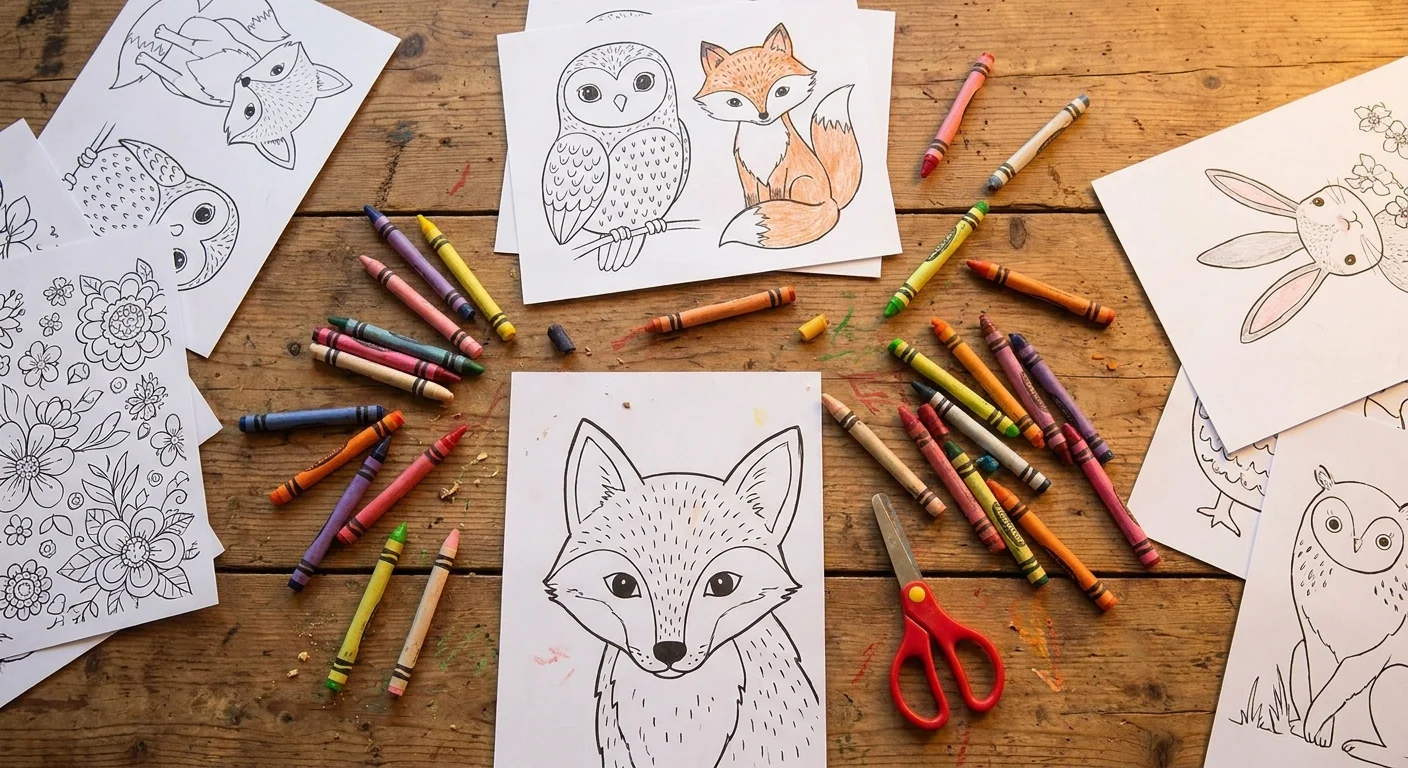
A child sits at a table with a green crayon in one hand and a blue crayon in the other. They are looking at a drawing of a forest, but they are not just coloring trees. We want to show you how to use these simple pages to build logic, reading, and science skills.
Sorting pages into logical groups
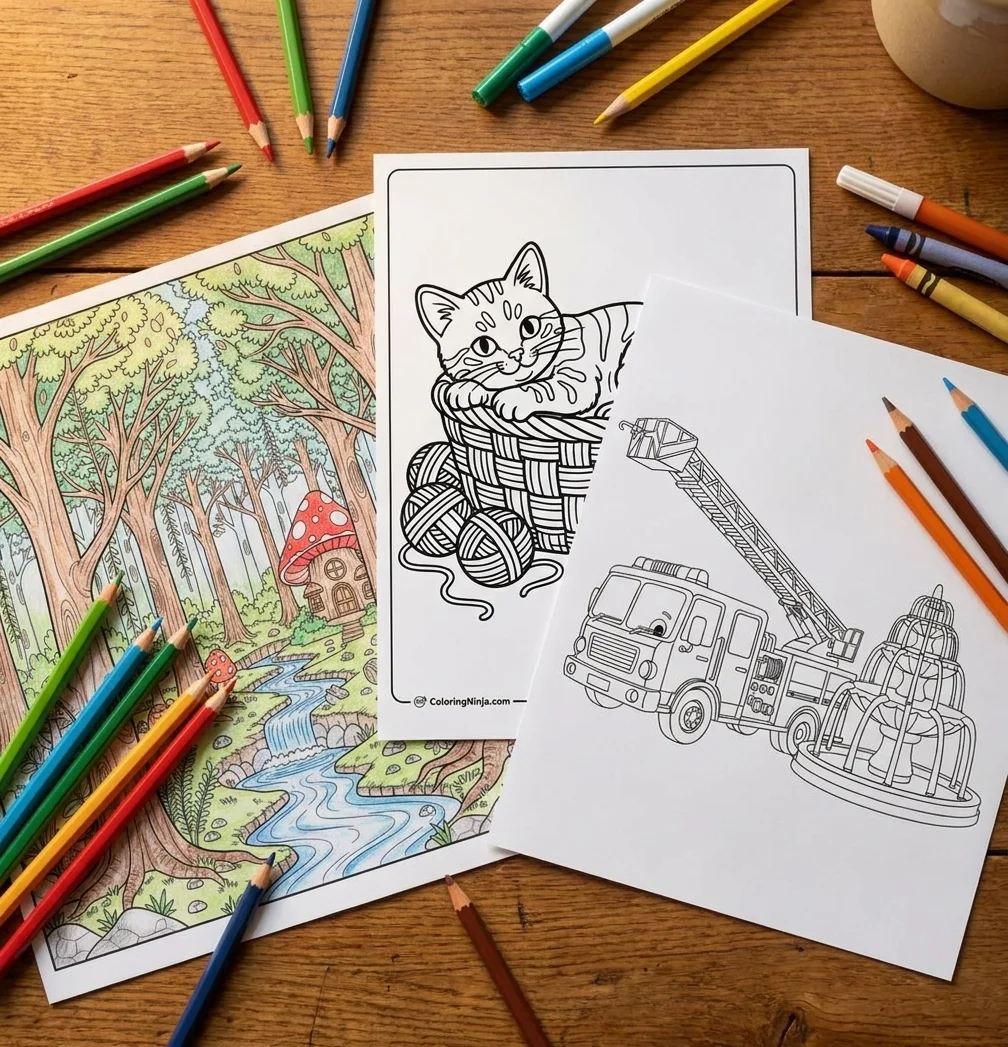
A stack of twenty papers sits on the kitchen table. You have a picture of a kitten, a big oak tree, and a fire truck with its ladder up. Instead of just handing them over, you ask which ones belong in a forest and which ones belong in a city. This turns a quiet afternoon into a lesson on environments and logic. You are not just filling time. You are helping a child categorize the world around them. This is a better way to start than just letting them grab the first page they see. It forces them to look at the content before they look at the colors.
Sorting is a basic math and science skill. When a child looks at a pile of 2,300 free printable coloring pages, they see a lot of choices. You see a chance to talk about sets. Group the animals by how many legs they have. Put the unicorns in one pile and the dinosaurs in another. This forces the brain to look at details like claws, hooves, or horns. It makes them stop and think before they reach for the orange crayon. I recommend picking five very different pages and asking the child to find one thing that is the same in all of them. Maybe they all have clouds or they all have eyes. This builds a sharp eye for detail that helps with later schoolwork.
Building literacy with custom names
A child stares at a blank line on a worksheet and feels stuck. Now, swap that worksheet for a page with the child's own name on it in big, blocky letters. They start coloring the J with stripes and the O with polka dots. Suddenly, they are not practicing spelling. They are decorating their own identity. This makes the letters stick in their mind better than a repetitive writing drill ever could. I prefer this method for early learners because it removes the pressure of being perfect. They can mess up a letter and just color over it. It keeps the mood light while the brain does the heavy lifting of letter recognition.
We have a generator on our homepage that turns any sentence into a coloring page. You can type Apples are red to create an instant reading lesson. Visitors can make 3 pages for free before they need an account. A free account comes with 3 credits. If you need more for a whole classroom, 50 credits cost $2.99 once with no subscription. This tool lets you create specific sentences for whatever phonics lesson you are teaching that day. It turns abstract sounds into something they can touch and color. Instead of reading a book, they are building the book. This ownership over the page makes them more likely to remember the words they just colored.
Scientific observation and nature study
Look at a dinosaur with three horns and a frill on the table. You can ask why those horns are there or what that dinosaur might have eaten. If the child colors the dinosaur bright purple, that is fine. But you can also pull up a book or a video about the Cretaceous period. Compare the drawing to what scientists think these creatures looked like. It turns a simple drawing into a research project. You might see a fox, a stream, acorns everywhere on a nature page. Ask the child to find those acorns. Talk about why the fox needs them or where the stream goes.
This works for the space category too. A page with planets and stars is a map. You can talk about which planet is closest to the sun while they color the rings of Saturn. Our site has thousands of options, from flowers to complex space scenes. Using these pages as a visual aid helps facts stay in a child's head. They spend twenty minutes looking at the shape of a nebula or the petals of a lily. That time spent looking is time spent learning. I suggest using a real photo alongside the coloring page. This helps the child see how artists simplify complex things into lines. It is a lesson in both science and art at the same time.
Fine motor skills and color theory
A box of 64 crayons usually ends up as a pile of broken wax bits on the floor. You can use this mess to teach about colors and physics. Give them a floral mandala with tiny, intricate petals and thin lines. Tell them they can only use warm colors like red, orange, and yellow for the center. Then, they must use cool colors like blue and green for the outer edges. This teaches color theory without a single boring lecture. They see how the colors sit next to each other. They see how a dark blue makes a light yellow pop.
The physical act of staying inside the lines of a mandala builds hand strength. This is the same strength they need to hold a pencil for writing or to use scissors. If a child finds the lines too small, move to a simpler category like cute or animals. The goal is to match the page to their current skill level. If it is too hard, they get frustrated. If it is too easy, they get bored. You want them right in the middle where they have to focus. I think it is better to give them a few high-quality tools rather than a massive bin of junk. A sharp pencil or a fresh marker makes a huge difference in how much they care about the final result.
- A fresh pack of 24 crayons
- Three different colored highlighters
- A set of washable markers with fine tips
- A clipboard for coloring on the go
- A small pencil sharpener for colored pencils
Connecting with community and history
Imagine taking a photo of the local post office or the family dog and turning it into a lesson. Our photo-to-coloring-page tool traces an uploaded photo into outlines. You can take a picture of a historical landmark in your town and print it out. Now, the child is coloring a piece of their own community. They see the bricks, the windows, and the signs in a way they never noticed before. This is much more effective than looking at a grainy photo in a textbook. They are literally filling in the history of their own neighborhood with their own hands.
This tool helps bridge the gap between real life and art. You can use it to teach about architecture or local history. If you go on a field trip to a farm, take a photo of a tractor. When you get home, turn that photo into a page. As they color the tires and the engine, ask them what the tractor was doing. It reinforces their memory of the day. It makes the learning personal and specific to their own life. I recommend using this for family trees too. Color in the faces of grandparents or cousins. It helps a child connect names to faces while they work on their fine motor skills.
Sequencing and creative story building
Three pages are spread out on the floor. One shows a seed in the dirt, the next shows a small sprout, and the last shows a tall sunflower. You can find these in our flowers or nature categories. Every page has a Print PDF button. These PDFs are already sized for Letter and A4 paper, so they come out perfect every time. You can also get a JPEG if you want to resize it yourself. I prefer the PDF because it keeps the lines crisp and easy to see. If the lines are fuzzy, the child will not try as hard to stay inside them.
Ask the child to put the pages in the right order. This is sequencing, which is a vital part of reading comprehension and storytelling. Once they color the pages, staple them together to make a book. They can write a sentence at the bottom of each page to describe what is happening. This turns a solo activity into a creative writing project. They become the author and the illustrator of their own story. It is better to have a finished product like a book than a pile of loose papers. It gives them a sense of pride. They can read their book to you at bedtime, which reinforces the lesson one last time.
Ready to Create Your Own?
Describe any idea and get a free, printable coloring page in seconds.
Try the Coloring Page GeneratorPick one page from the animals category and find three facts about that creature before you start. This simple step turns a quiet activity into a real discovery about the natural world.