
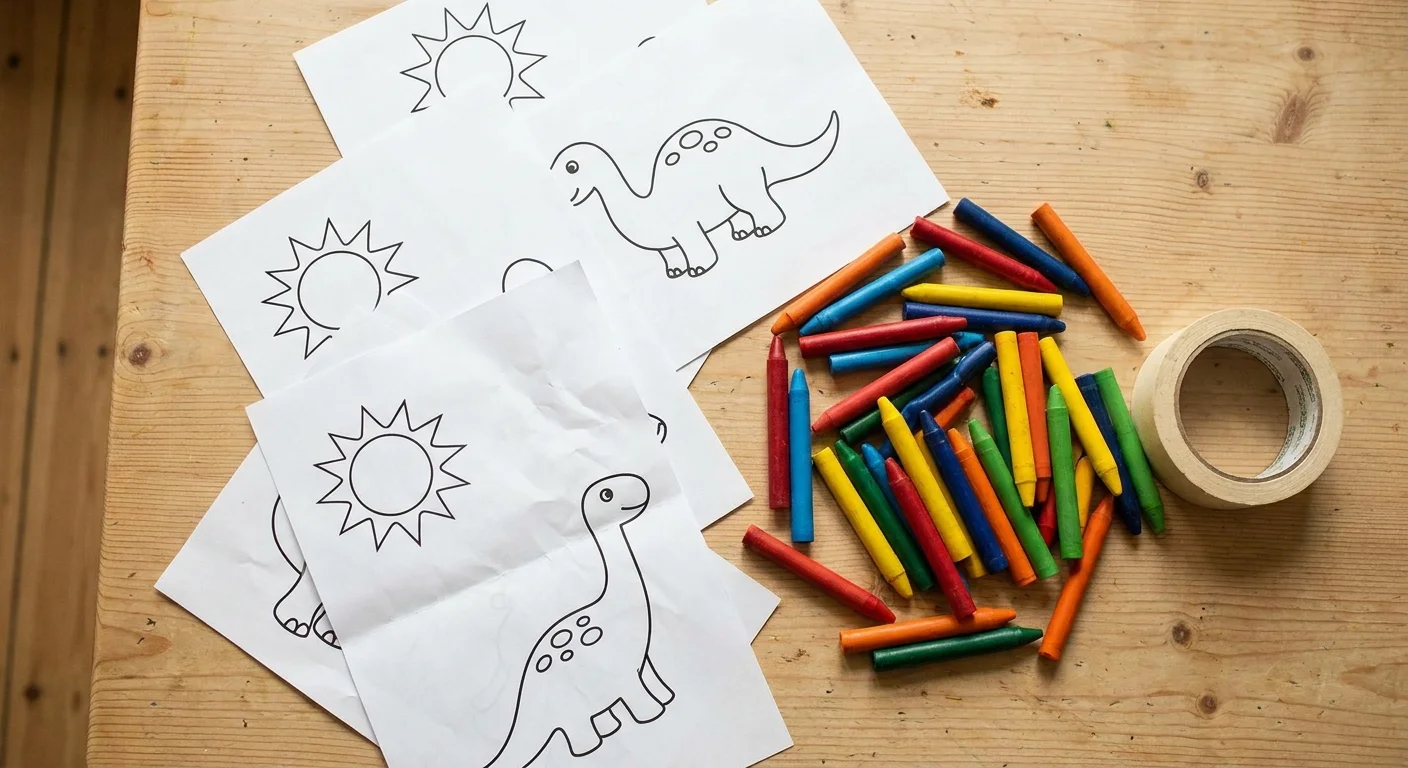
A two-year-old grips a chunky green crayon in a tight fist and makes a single, jagged line across a white page. We have over 2,000 free printable coloring pages to help you match the right image to your child's current stage of development.
Big shapes for the scribble phase
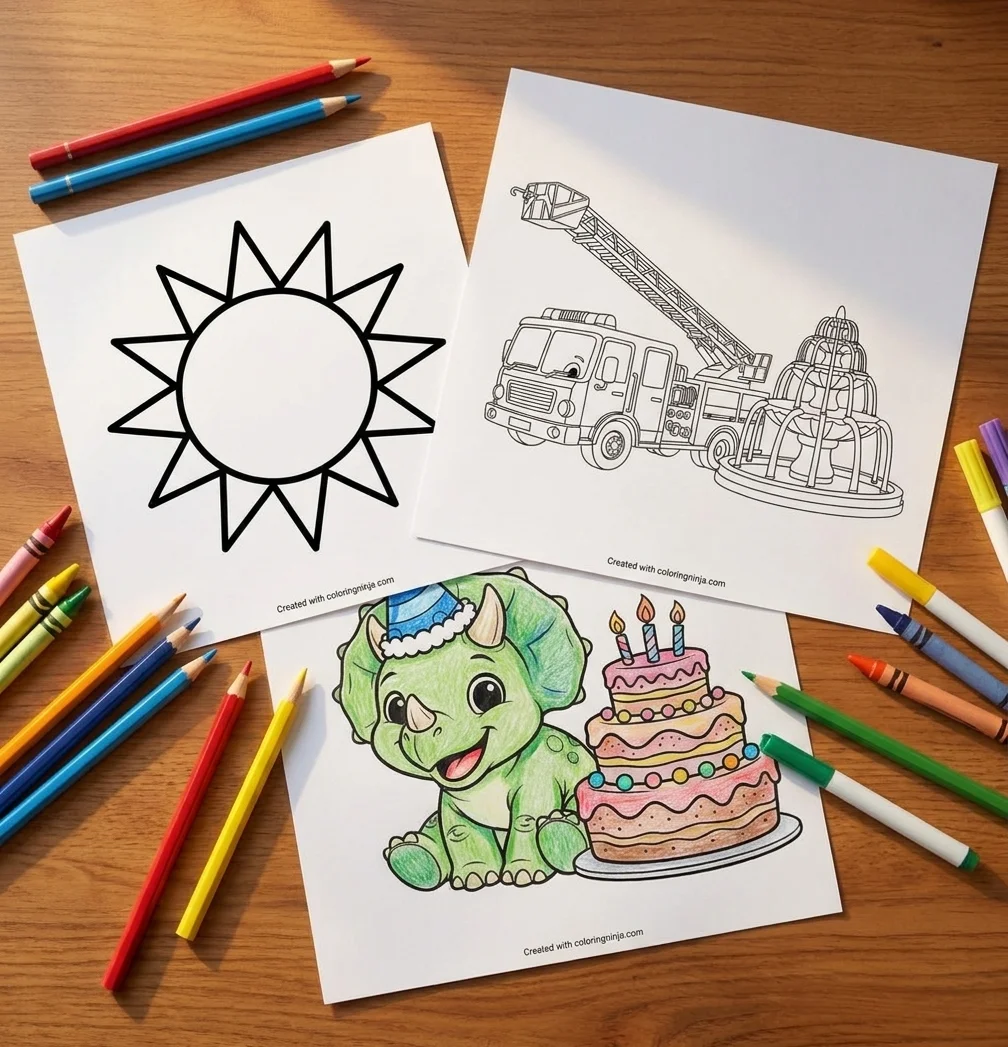
A one-year-old does not care about the edges of a drawing. They care about the sound the crayon makes when it hits the paper and the way a bright streak appears out of nowhere. If you give them a page with hundreds of tiny details, they will just cover the whole thing in a single color. It is better to start with something that has a massive, clear focal point. I recommend starting with a simple round sun with thick lines because the heavy black borders give them a target. When the lines are thick, the child starts to notice the difference between the white space inside and the white space outside the shape.
You should tape the corners of the paper to the table or the high chair tray. Toddlers get frustrated when the paper slides away every time they apply pressure. At this age, coloring is a full-body activity. They lean into the stroke and use their whole arm instead of just their wrist. Thick lines and big, open spaces like a single large apple or a giant ball work best because they allow for these wide, sweeping motions. We see parents try to give toddlers complex scenes too early, but sticking to one big object per page builds their confidence much faster. They feel like they actually finished something when that one big shape is filled with color.
Recognizable objects for two year olds
Around age two, a child starts to point at things in books and name them. They shout out when they see a dog on the street or a bus passing by. This is the perfect time to move from abstract shapes to clear, singular objects. They want to see the things they recognize from their daily life sitting right there on the paper. I suggest printing a fire truck with its ladder up or a big, friendly cow. When they recognize the object, they stay engaged with the page for three minutes instead of thirty seconds. They might even try to use the right colors, like picking up a red crayon for the truck, which shows they are connecting the drawing to the real world.
Our site makes this easy because every page has a Print PDF button that is already sized for Letter and A4 paper. You do not have to mess with printer settings or crop images while a toddler is screaming for their paper. You can also grab a JPEG download if you want to save it for later. At this age, the goal is to have a stack of pages ready to go at a moment's notice. When the rain starts and you are stuck inside, having a folder of animals and vehicles can save the entire afternoon. We have categories for animals, cute things, and dinosaurs that fit this age group perfectly. Stick to pages with wide borders and very few background elements so the child stays focused on the main character of the page.
Storytelling and scenes for age three
Three-year-olds start to invent stories about what they are drawing. They don't just see a lizard; they see a lizard going to a grocery store. This is when you should move away from single objects and start giving them small scenes. A great example is a dinosaur wearing a party hat or a cat sitting on a fence under a crescent moon. These extra details like the hat or the moon give you things to talk about while they color. You can ask them what the dinosaur is eating at the party or where the cat is going. This turns coloring from a solo physical task into a shared language activity.
You will notice they start to have very strong opinions about which pages they want. One day it is all about space and the next day they only want to look at the unicorns category. I recommend printing a variety of scenes and letting them choose. Giving them the power to pick between a scene with a castle and a scene with a rocket ship makes them more likely to sit still and finish the task. They are starting to develop better control over their fingers, so the lines can be a bit thinner now. They might try to color the party hat a different color than the dinosaur, which is a huge step in their coordination. If they want to see a specific scene that doesn't exist, you can use our homepage generator to turn a plain sentence into a black-and-white coloring page. You get three pages for free before you even need an account.
Fine motor control and complex patterns
By the time a child is four, they are often obsessed with staying inside the lines. They have the hand strength to use smaller crayons or even colored pencils. This is the age where a floral mandala becomes a fascinating challenge rather than a confusing mess. The repeating patterns of a mandala require them to focus and make small, deliberate movements. It is an excellent way to practice the grip they will soon need for writing letters in school. If the page is too simple now, they might get bored and start coloring on the table instead. They need the challenge of small petals, leaves, and geometric shapes.
I prefer mandalas and complex nature scenes for this age because there is no right or wrong way to color them. While a fire truck should probably be red, a mandala can be any color in the box. This encourages them to experiment with color combinations. We have a huge selection of flowers and space scenes that offer this level of detail. If they are particularly proud of a specific toy or a pet, you can use our photo-to-coloring-page tool. It traces an uploaded photo into outlines, so they can color a page that looks exactly like their own bedroom or their favorite stuffed bear. It adds a level of personal connection that keeps an older toddler occupied for much longer than a generic store-bought coloring book ever could.
Personalization and the transition to letters
Toddlers love seeing their own name. It is usually the first word they learn to recognize and the first one they try to write. You can bridge the gap between art and literacy by providing a page with the child's own name on it. When the letters are big and hollow, they can color inside them just like they would with a picture of a dog. This familiarizes them with the shapes of the letters without the pressure of a formal lesson. We offer name pages and a letters category specifically for this purpose. It turns a standard coloring session into a quiet way to learn the alphabet.
If you have a unique name or want a specific phrase, our generator tool is the best way to get exactly what you need. A free account comes with 3 credits, and if you find yourself using it every day, 50 credits cost $2.99 as a one-time payment. There is no subscription to worry about. I recommend printing out their name and the names of their siblings or friends. They can color the letters and then decorate the space around the name with small drawings. It makes the page feel like it belongs to them. This sense of ownership is a powerful motivator for toddlers who are starting to assert their independence. They aren't just coloring a random page; they are making their mark on something that represents who they are.
The right supplies for toddler success
Even the best coloring page fails if the supplies are wrong. I have seen many parents hand a one-year-old a set of thin, brittle colored pencils only to have the tips snap off in seconds. For the youngest kids, you need wax crayons that are thick enough to withstand being dropped or stepped on. As they get older, you can introduce washable markers, but be prepared for the caps to be left off. If you want the best results from our PDF printables, use a slightly heavier weight of paper than standard office bond. A 24lb or 28lb paper feels better under a crayon and prevents markers from bleeding through to the table.
Setting up the environment is just as important as the page itself. Make sure the lighting is bright so they can see the lines clearly. Use a hard, flat surface rather than a carpeted floor, as the texture of the carpet will show through the paper and ruin the drawing. If you are using our photo tool to create custom pages, try to use photos with high contrast so the outlines come out sharp and easy to follow. Having a dedicated spot for coloring helps a toddler understand that this is a focused activity. When they have the right tools and a page that matches their skill level, they are much more likely to stay engaged and enjoy the process.
- Jumbo wax crayons for children under three
- Washable markers for children four and up
- Masking tape to hold paper corners down
- Heavyweight printer paper to prevent tearing
- A sturdy clipboard for coloring on the go
- A small container to keep broken crayon bits for melting
Ready to Create Your Own?
Describe any idea and get a free, printable coloring page in seconds.
Try the Coloring Page GeneratorPick one page that matches your child's age and print it out using the PDF button right now. Set it on the table with just two or three crayons to see how they handle the shapes. Clear the clutter off the table and let them start their first line.